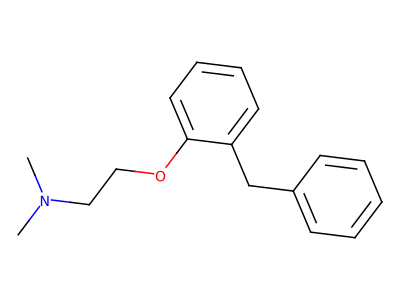
|
| ID |
DDInter1459 |
| Drug Type |
small molecule |
| Molecular Formula |
C17H21No |
| Molecular Weight |
255.361
|
| Description |
Phenyltoloxamine is an antihistamine drug with sedative and analgesic effects. It is a H1 receptor blocker and a member of the ethanolamine class of antihistaminergic drugs. It is available in combination products that also contain other analgesics and antitussives such as acetaminophen. Phenyltoloxamine citrate is the more common salt form that acts as an active ingredient in pharmaceutical products and promotes hay fever relief via reversing the effects of histamine. Phenyltoloxamine acts as an adjuvant analgesic, which augments the analgesic effect of acetaminophen. It also potentiates the effects of other drugs, such as codeine and codeine derivatives.
Although phenyltoloxamine's ability to potentiate the effects of analgesics may be explained in part by its chemical nature as a first-generation H1 antihistamine that is capable of crossing the blood-brain barrier and causing tranquilizing effects at CNS histamine receptors, many of the drug's specific pharmacokinetics are not readily available - perhaps also because many early (phenyltoloxamine was involved in studies as early as the 1950s) first-generation antihistamines were not optimally investigated [A32705]. Nevertheless, phenyltoloxamine is used to a fairly limited extent in contemporary medicine, with only very few products involving it as an active ingredient.
|
| ATC Classification |
- |
| IUPAC Name |
[2-(2-Benzylphenoxy)Ethyl]Dimethylamine |
| InChI |
Inchi=1S/C17H21No/C1-18(2)12-13-19-17-11-7-6-10-16(17)14-15-8-4-3-5-9-15/H3-11H,12-14H2,1-2H3 |
| InChI Key |
IZRPKIZLIFYYKR-UHFFFAOYSA-N |
| Canonical SMILES |
CN(C)CCOC1=CC=CC=C1CC1=CC=CC=C1 |
| Useful Links |
DrugBank
ChEMBL
|